


Hi Everyone!
Sorry about the delay. I know I haven’t updated in a while. Mainly because of lack of internet for travelling with my mother to visit her relatives approximately 820 km north of where I live, but for those of you who like to read, I’ve got good news; four books so far. As some of you might know and identify with, I find that reading while travelling is a great way to pass time as I think the ride itself doesn’t feel as long. Therefore, I brought a lot of books (I actually went to the library to return tow of the books I had borrowed that I had finished reading, and I came out of the library with four new books. The library is my new best friend), and seeing as how I haven’t had any internet and the mosquitoes there have more or less kept me in the house (it was staying inside or die…or so it felt anyway), I’ve had some time to read there, but I’m only reviewing the four books I’ve finished.
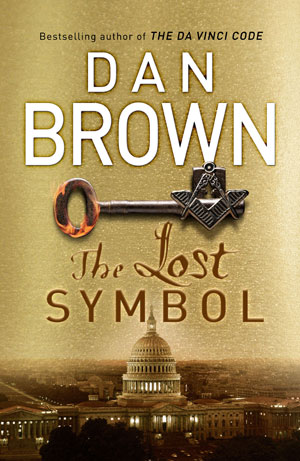
The first one was Dan Brown’s somewhat new novel; the Lost Symbol (More info). It’s a Robert Langdon novel and for those of you who have read previous Robert Langdon novels by Dan Brown know (and the title reveals it too) that it’s about symbolism, and symbolism often go hand in hand with religion. At least in Dan Brown’s Robert Langdon-novels. As always as well, there are “secret” societies involved. This time the story involves the Free Masons (and their sister-society; The Order of the Eastern Star, a little bit anyway. Not much) and above all, the slogan “Everything will be revealed in the 33rd degree” is frequently referred to, which happens to be the highest degree within the order, the boiling point of water according to Newton’s degree-system and such things. This story also involves a woman by the name of Katherine, and her brother Peter has been kidnapped. Her brother’s part of the Free Masons, Langdon’s friend and Langdon gets dragged in to all this by the kidnapper who threatens to kill the brother if Langdon doesn’t help him find the Free Masons’ treasure; ultimate wisdom. As if things weren’t bad enough and Langdon under pressure, the psycho wants him to do it by the end of the night.
Slight spoiler warning (or major spoiler warning) if you haven’t read the novel; the psycho turns out to be the Peter's son Zachary (who goes by several different names; amongst the Mal'akh) who everyone thought was dead. The psycho dies in the end and the brother is saved. Somehow Langdon does it again and everything is fine again.

The next book I read wasn’t good. At least not in my opinion, but I suppose you have to read bad books once in a while to appreciate the good books. At least that’s what I told my sister when she asked why I just didn’t stop reading after I realized it was bad. It was Meg Cabot’s book; Queen of Babble (More info). I suppose it was good, if you like that whole “I-met-a-guy-and-go-to-europe-but-things-ended-so-I-get-on-a-train-and-meet-Mr-Tall-Dark-and-Handsom-and-fall-in-love-with-him” kind of books, but I’m not much for that. It was well written, I’ll give it that, but the storyline and plot was obvious. Sure, the back of the book gave parts of it away, but I realized it even from the beginning that things were going to end up the way they ended up. It was too much foreshadowing to even call it foreshadowing, I think.
The novel was about an American college graduate (almost graduate. She forgot to turn in a paper which lead to her degree in Fashion History being postponed)named Lizzie Nichols who travels to England to meet up with her boyfriend but she finds out that her boyfriend only wants one thing from her; Money. When she realizes that, she goes to France to meet up with her friend Shari and her boyfriend. On the train there, she meets a stranger named Jean-Luc who happens to own the castle (Cheatû Mirac) where Shari and her boyfriend Chaz are working, so Lizzie goes there, and gets to help as well. They are preparing for Jean-Luc’s (Luke’s) cousin who is getting married and then there is a disaster with the Wedding dress and Lizzie is the only one who can help (or so it would seem). That’s pretty much it. Like most stories, this one ends well, too.

The third book I made my way through during these approximate 820 km up to mother’s relatives was called The Virgin Blue (More info )and is in part a historical novel. The reason I say “in part” is because parts of the story takes place a few centuries ago, like most of Tracy Chevalier’s books, but in part takes place in the present. I’ve read most of her books (except “Girl with the Pearl Earring” and “Magical Creatures” [look up the last one]) and this book was interesting. I’m not saying it’s bad, because it most certainly was not, but the style of writing differed from the other novels (jumping between past and present the way this novel does). I like historical novels like that, and therefore, I liked the story of the past a bit better than the present part.
It’s about a young girl called “La Rousse” (due to her reddish hair, which is the color the Virgin Mary is presumed to have had) or Isabelle. She marries in to a wealthy family (Tournier) because she gets pregnant with a child that belongs to the family’s son. Nobody seems to like her. She has 3 children (that we know about) and her husband is not very friendly. The family goes from being catholic (where “La Rousse” was between them and God and worked as a medium to pray to) to French protestants, where worshipping the Virgin Mary was a sin, and being called “La Rousse” wasn’t exactly a good thing and people thought of Isabelle as being a witch. The youngest child, her daughter Marie, starts to get the red hair that her mother possesses and to stop this, Isabelle decides to keep it a secret and in secret she starts taking out the strands that are that color. A merchant comes to the city with the Virgin blue color (a color during the renascence which got to represent the Virgin Mary in paintings of that era) on a piece of fabric. Isabelle wants nothing more than to own that fabric, but she can’t because it would be considered inappropriate so she suffers in scilence.
In the present, Ella Tournier (Turner) from America moves to France with her husband of two years because of his job and she starts to dig in to her family history (linked to Isabelle and her family of Tournier’s ). She falls (not so unexpectedly) in love with Jean-Paul, the librarian who helps her do research. This is why I don’t like the story. I think she’s a mean woman, because her husband, though distant, is kind (or, well, he’s not a complete idiot or mean to her or something), while Jean-Paul seems to flirt with her from Day 1 even though he knows she’s married. I can understand her not wanting to be with her husband, but Jean-Paul is…..UGH! Anyway, she goes through some personal crisis, her hair becomes “La Rousse” red and she goes to visit family in Switzerland. She finds out about her family history, that she’s pregnant and that she wants to be with Jean Paul instead. I don’t like this woman.
However, the story is good in general, and it wasn’t a waste of time.

The last book so far was called Inkheart (More info), and was recommended to me by a friend. I liked it. It was mysterious and fictional (almost a bit science fiction, or so it felt). However, the book was probably written for 10-14 year olds (maybe even 10-13/10-12) and if I had been that age-group (or read it the first time when I was in that age group) I think I would have liked it more.
Anyway, the story changes it’s 3rd person narrative a bit during the story and shifts from person to person, but added up, the main protagonist of the story is Meggie; a 12-year old girl with only her father, whom she calls Mo.
In the beginning of the story, a mysterious man shows up and Meggie is a bit lost. Her father is told that someone is after him, and Meggie is scared. They leave, and go to visit her mother’s aunt Elinor, but the bad guys catch up with them and take her father. Now there’s some chaos; they take her father to a village, Meggie wants to follow, and when she and the aunt does; they’re captured as well. Then something strange happens. Meggie finds out that her father can make stories real. By reading aloud, her father can make characters come alive. She also finds out that he’s conjured the bad guys on accident and that whenever someone comes out of a story, someone else goes in. Not all too surprising at this stage is that one of the bad guys servants is her mother, who went in to the story and then came out when another “reader” like her father conjured her by accident. Things take a drastic turn as they all get out of there, but then have to go back because Meggie and the man who wrote the bad guys that her father read out gets captured. It’s quite an exciting novel when you think about it, but like I said, it’s more of a children’s novel. Maybe the movie's better...
Wow, this was a long post, but after all, it’s three books we’re talking about. I suppose that takes some time. Anyway, That’s all for now, folks!

1 Notes:
The Inkheart movie is not better than the books (I agree the books are a little childish but they're still great!)
By being nice to yourself you could visit Frösön, I hear it takes a while to get there, a lot of time to read ;)
(And some days they live in pajamas:P)
Post a Comment